
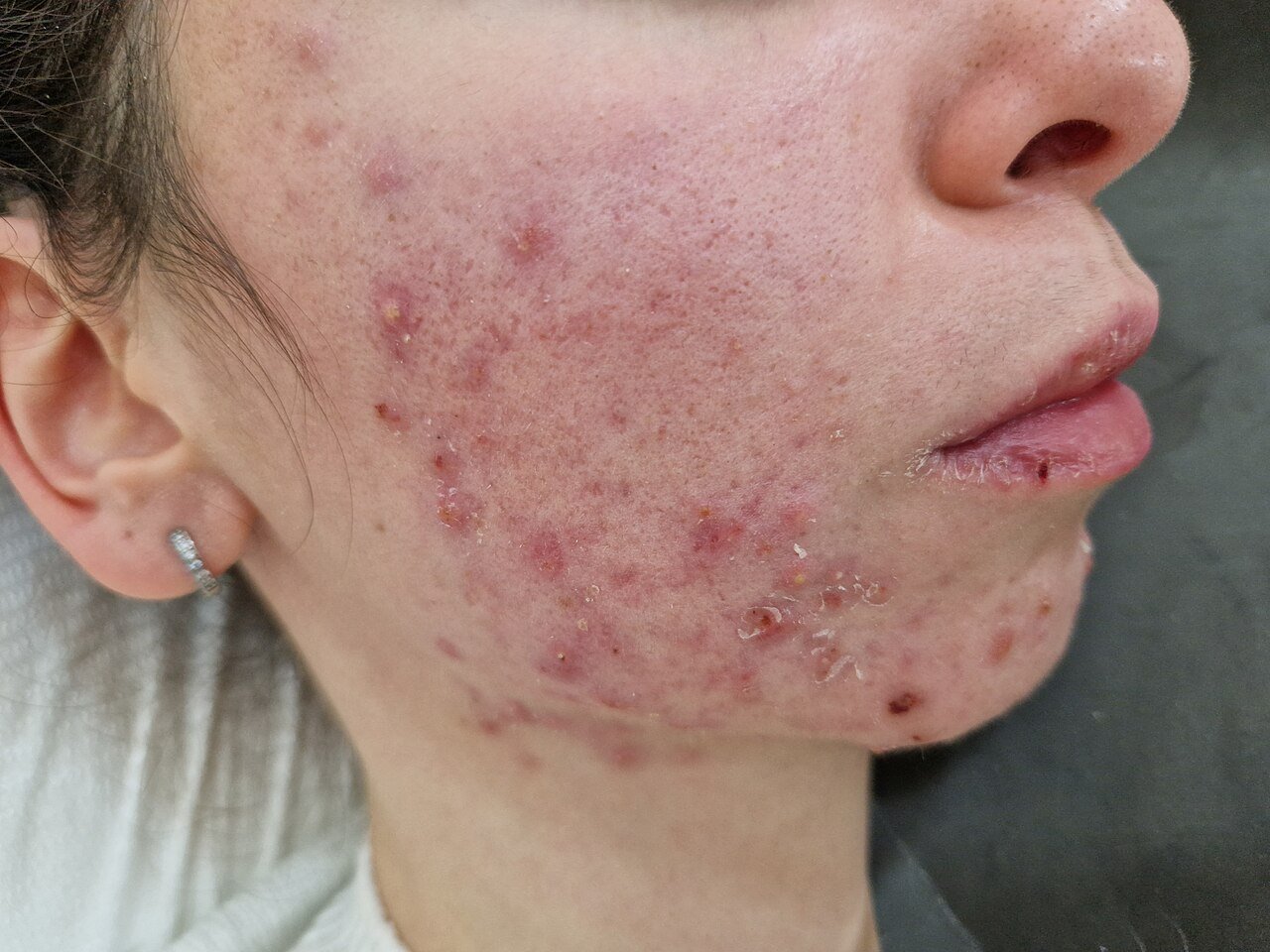
My acne is gone, doctor, why does my skin still look like this? – We normally assume that once the breakouts stop, the marks left behind would fade on their own, the way a bruise does.
For some this might be true. For the rest, not so much. And that distinction is the single most important thing I explain to almost every acne patient I see.
This confusion is so common that I think it deserves its own detailed piece, separate from the marks-and-warning-signs conversation I’ve had in 5 Critical Acne Warning Signs You Shouldn’t Ignore, and separate from the broader question of adult acne versus teen acne. Once the active breakouts are under control, the next question patients ask is almost always about what’s left behind. That’s a completely different clinical problem, and it comes with its own set of answers.
First: Is It Actually a Scar?
Before we talk treatment, we need to sort marks into two very different categories. Mixing them up is where a lot of wasted money and disappointment comes from.
Post-inflammatory hyperpigmentation (PIH) and post-inflammatory erythema (PIE) are flat discolorations left behind after a pimple heals. Brown or dark marks in PIH. Pink or red marks in PIE. These are not structural scars. They’re changes in pigment or in the surface blood vessels, and given time, sun protection, and the right topicals, they genuinely do fade. Often over several months. This is the category my young patient was expecting.
True atrophic scarring is a different animal altogether. It involves actual loss of collagen and tissue structure, a physical indentation or textural change you can feel with your finger, not just see. These do not resolve with time alone. The research on this is fairly blunt. Most of the natural collagen remodeling that’s going to happen occurs in the first six months after the scar forms. What remains after twelve to eighteen months is essentially permanent without active treatment.
So if you’re staring at flat brown marks, patience and consistent sunscreen use will get you most of the way there. I go into the UV-driven skin damage piece of this in more depth in my aging in Indian skin article. But if you’re staring at actual craters or pits, you’re dealing with true scarring, and that needs a procedural conversation.
The Three Types of Atrophic Scars
This is where treatment planning actually starts. And here’s the part most patients don’t expect. Different scar shapes respond to completely different treatments. There is no single procedure that fixes all of them, and dermatologists who tell you otherwise are usually trying to sell you their one available machine.
Ice pick scars are narrow, deep, and tunnel straight down into the skin, sometimes reaching the deep dermis. They’re the most stubborn of the three, precisely because most resurfacing treatments work across the surface of the skin and simply can’t deliver enough effect to the base of a tunnel that’s less than 2mm wide.
Boxcar scars have sharper, more defined edges and a wider base than ice picks. Think of them as shallow, squared-off craters. They can be shallow, limited to the upper dermis, or deep, extending into the reticular dermis. That distinction changes which treatment will actually work.
Rolling scars are the widest but shallowest of the three, giving the skin a wavy, undulating look rather than a sharply defined pit. They form because of fibrous bands tethering the skin down from underneath. Which turns out to be the key to treating them, as you’ll see in a moment.
One more thing worth knowing. Most people with meaningful acne scarring don’t have just one type. They have a mix of all three. Which is exactly why a combination approach, not a single miracle treatment, is how this is actually managed in clinical practice.
Matching Treatment to Scar Type
Subcision is the standout for rolling scars specifically. Rolling scars are caused by tethering, fibrous bands pulling the skin down from beneath the surface, so the treatment goes after the cause. Subcision involves inserting a needle or blunt cannula beneath the scar to physically release that tether, which allows the skin to sit higher. The resulting controlled trauma also stimulates fresh collagen production underneath. It’s notably less effective on boxcar scars, since boxcars usually lack that same tethering. There’s no band to cut. A 2025 study on subcision combined with microneedling found strong results specifically in rolling and boxcar scars, with just over 60% of patients reporting 50% or greater improvement, and good outcomes even in more severe Grade 3–4 scarring.
TCA CROSS, which stands for Chemical Reconstruction of Skin Scars, is the treatment with the most consistent evidence specifically for ice pick scars. A high-concentration trichloroacetic acid is applied in a focal, targeted way directly into each individual scar, not across the whole face. This triggers a localized inflammatory response that rebuilds collagen from the base of the scar upward. Research reviews describe this as the most reliable approach available for ice pick scarring. It typically requires multiple sessions spaced over several months, with reported depth reduction in the range of 50 to 70% after a full course.
Microneedling works by creating controlled micro-injuries in the dermis that stimulate collagen and elastin production and encourage fibroblast activity. It’s the same underlying mechanism I discuss in more procedural detail in Chemical Peels vs. Laser Treatments. Microneedling is particularly well suited to shallow boxcar and rolling scars, and it carries a meaningful safety advantage in Indian and other darker skin tones. It doesn’t rely on heat or light-based energy that can trigger post-inflammatory pigmentation, a real concern I’ve written about at length in Dermatologist vs. Beautician.
Fractional lasers and RF microneedling add thermal or radiofrequency energy to the mechanical injury of standard microneedling. This can improve results for boxcar and rolling scars, but it requires real caution and expertise in Fitzpatrick skin types IV to VI, which covers the majority of Indian patients. A recent comparative survey of board-certified dermatologists treating boxcar scarring in skin of color found that subcision and RF microneedling were the most preferred approaches overall, ahead of TCA CROSS and CO2 laser, largely on safety grounds for pigmented skin.
Punch techniques, meaning punch excision or punch grafting, come into play for the deepest boxcar scars and the largest ice pick scars. These are the cases where the scar tissue itself needs to be physically removed or replaced rather than remodeled from within. They’re more invasive, and they’re typically reserved for scars that haven’t responded adequately to the less invasive options above.
What a Realistic Treatment Plan Actually Looks Like
Because most patients have a mix of scar types, the honest, evidence-based approach isn’t one procedure. It’s a sequenced combination, tailored to what’s actually on your face.
In my own practice, that often means subcising the rolling scars, running TCA CROSS on the ice picks, and using microneedling or a fractional approach to blend the boxcars and improve overall texture. Spread across multiple sessions over several months rather than compressed into one visit.
Approximate cost ranges for these procedures in the Indian market:
- Microneedling: ₹4,000–10,000+ per session, depending on whether RF is added
- TCA CROSS: typically priced per session similarly to a focused chemical peel, often ₹3,000–6,000, with 3–6 sessions needed for ice picks
- Subcision: variable, often bundled with microneedling in combination protocols
- Fractional laser resurfacing: generally the higher end of the range, reflecting equipment and expertise involved
I’d rather tell a patient upfront that this is a multi-session, multi-month process than let them believe one HydraFacial or one laser sitting is going to erase years of scarring. That mismatch in expectations is something I also address in my HydraFacial review, where I’m clear about what that particular treatment can and can’t do.
If you’re ready to move from research to an actual plan, this is the kind of scar-specific procedural work we cover under our acne treatment services.
Setting Honest Expectations
I want to be direct about this, because it matters more than almost anything else in this conversation. Improvement, not erasure, is the honest ceiling for most atrophic acne scarring. Well-executed, appropriately matched combination treatment can substantially soften the appearance of scarring. Often enough to change how someone feels looking in the mirror. But claiming any treatment will make scarring disappear entirely sets patients up for disappointment, regardless of how skilled the practitioner is.
This is also exactly the kind of nuanced, skin-type-specific decision-making that shouldn’t be handled by someone without dermatology training. The stakes of picking the wrong energy-based device for darker skin, or over-aggressive peeling on active scarring, are real. Which is a big part of why I wrote Dermatologist vs. Beautician the way I did.
What I Tell Every Acne Scar Patient
Get your active acne under control first. Treating scars while new breakouts are still forming is fighting a losing battle, and it’s worth revisiting my adult acne versus teen acne piece if you’re still in that phase.
Get an honest assessment of which scar types you actually have. A boxcar-focused treatment plan won’t touch your ice picks, and vice versa.
Expect a multi-month, multi-session process rather than a single fix.
And protect the skin diligently with sunscreen throughout treatment. New post-inflammatory pigmentation from unprotected sun exposure during healing can undo a meaningful chunk of your progress, and I’ve watched it happen.
Dr. Shruti Patil is a board-certified dermatologist and cosmetologist at Dr. Mahajan Skin To Bone Clinic, Pashim Vihar, New Delhi. She has particular experience treating acne scarring across the full range of Indian skin tones, with careful attention to minimizing pigmentation risk during procedural treatment.
Ready to get an honest assessment of your acne scarring and a treatment plan built around your specific scar types? Book an appointment with Dr. Mahajan’s Clinic to discuss your options.
Leave a Reply