
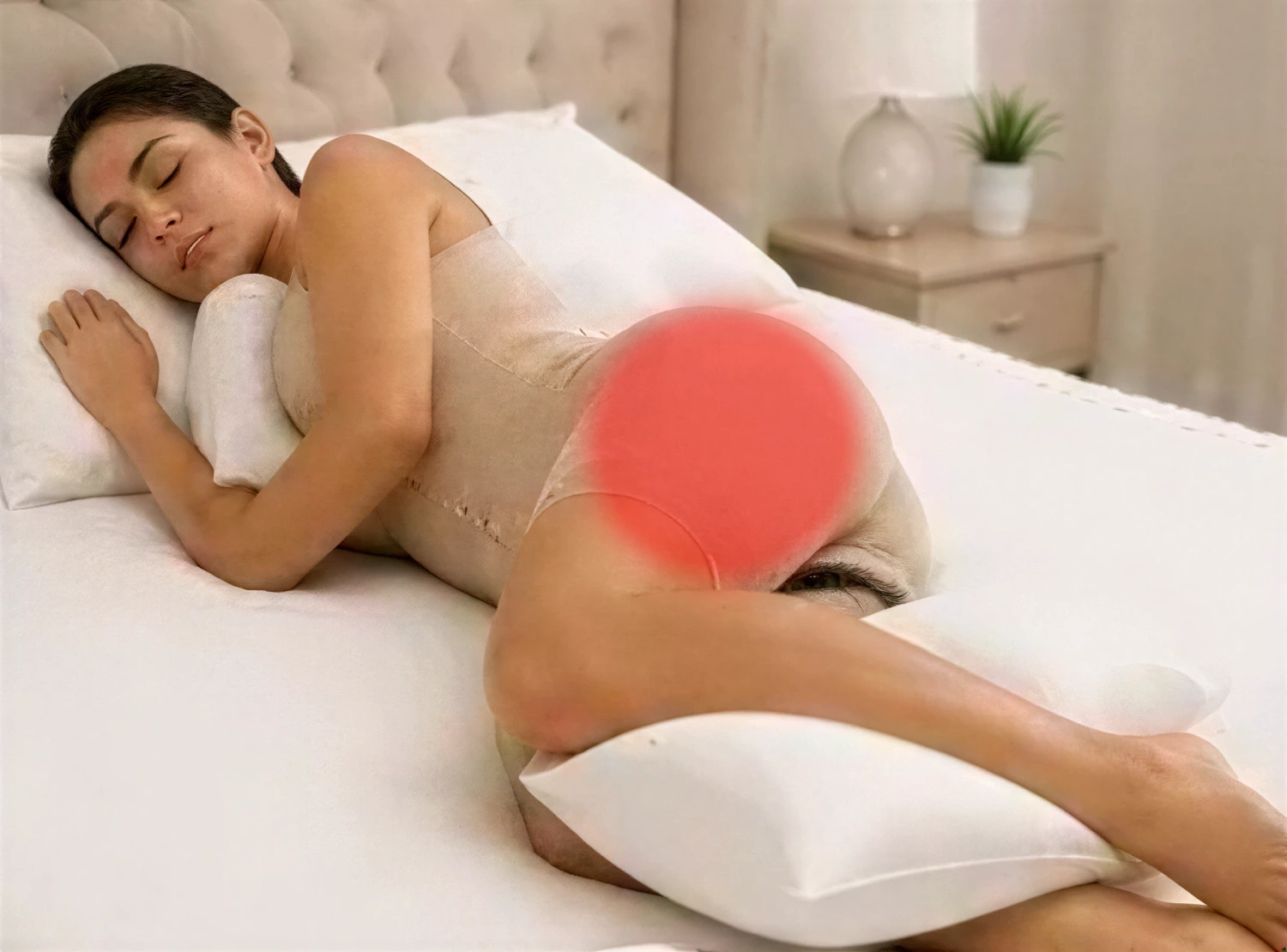
You hip replacement surgery is done, you are recovering well. But, nobody warns you about this part – Sleeping Positions After Hip Replacement .
The surgery gets explained in detail, the physiotherapy gets scheduled, the walking milestones get mapped out week by week, and then you get home, exhausted, and realize you have absolutely no idea how to lie down without feeling like your hip might pop out of place.
That fear is common, and for the first six to twelve weeks, it’s not entirely unfounded. This is the window where dislocation precautions matter most, and sleeping position sits right at the center of that concern, simply because you spend six to eight hours a night in a position you’re not consciously controlling.
Why Sleep Position Actually Matters Here
A new hip implant needs time for the surrounding soft tissue – muscles, tendons, the joint capsule to heal and tighten back around it.
Until that happens, certain positions put the hip at a genuinely elevated risk of dislocation, particularly combinations of deep flexion, crossing the leg past the midline, or rotating the hip inward.
This risk is highest in the first six weeks and drops steadily after that, which is roughly the same arc covered in the hip replacement recovery timeline early caution, gradually relaxing restrictions.
The good news: sleeping “wrong” doesn’t usually happen through a single dramatic movement.
It happens through the slow, unconscious drift that occurs over hours of sleep rolling toward the operated side, letting the top knee fall inward, tucking the legs up. The fixes are mostly about physically blocking those drifts rather than relying on willpower while unconscious.
The Safest Position: Flat on Your Back
For the first several weeks, sleeping on your back is the most reliable position, and for good reason – it removes almost all the risk factors in one move.
The setup that works best: lie flat, with a pillow placed between your knees or under them to keep the legs in a neutral, slightly abducted position. Avoid crossing your ankles or letting one knee drift toward the other. Some patients also find a small pillow under the operated leg’s calf comfortable, elevating it slightly without forcing hip flexion.
If you’ve never been a back sleeper, this can feel unnatural for the first week or two. It gets easier. Most patients report it stops feeling foreign by around the third or fourth week right around when strength and gait normalize enough that the anxiety around movement in general starts easing too.
Side Sleeping: Possible, But Timing and Technique Matter
Most surgeons clear side sleeping somewhere between four and six weeks, though this varies by surgical approach posterior approach hips tend to need more caution here than anterior approach, since the posterior capsule (the structure most implicated in dislocation risk with that technique) needs more healing time before tolerating the hip angles involved in side-lying.
Once cleared, the rule that matters most: sleep on the non-operated side, with a pillow firmly wedged between your knees. This keeps the top leg (the operated one) from adducting crossing down and inward toward the mattress which is the exact movement most associated with posterior dislocation.
Sleeping on the operated side itself is generally more comfortable once healing has progressed further, often somewhere in the two-to-three-month range, but this is genuinely something to confirm with your surgeon rather than assume based on how good the hip feels. Feeling fine and being structurally ready aren’t always the same timeline a point that comes up just as often in long-term expectations after hip replacement as it does here.
What to Avoid, Full Stop
A short, concrete list is more useful here than a long explanation: no sleeping on your stomach for the first several weeks, since it forces hip rotation that’s difficult to control unconsciously.
No pulling the knees up toward the chest, the fetal position is one of the higher-risk postures for posterior dislocation. No crossing legs or ankles, even briefly, even while just getting comfortable. No sitting up sharply from lying flat roll to your side first (non-operated side, with the pillow between your knees), then push up with your arms.
That last one isn’t strictly a sleeping position issue, but it’s the moment most dislocation scares actually happen not during sleep itself, but in the groggy, half-asleep transition of getting up for water or the bathroom at 3 a.m., when the careful habits built during the day quietly lapse.
Practical Setup Tips That Actually Help
A few small adjustments make the whole first month meaningfully easier:
- Keep a firm pillow within arm’s reach of the bed at all times, not in a drawer or across the room you want zero friction between “I need to reposition” and actually doing it.
- A slightly elevated bed height, or a bed rail, makes the sit-to-stand transition easier and reduces the temptation to twist or lever up awkwardly.
- If getting in and out of a low bed is genuinely difficult, some patients find a recliner more manageable for the first week or two, though this should be a short-term bridge, not a long-term substitute for normal bed sleep.
When This Stops Being a Daily Concern
For nearly all patients, active thought about sleep positioning fades by around three months, once soft tissue healing is well established and the precautions become habit rather than active vigilance. By the point most patients reach the longer-term recovery milestones walking without a limp, returning to normal activity sleep position stops being something to think about at all. You just sleep. That’s the actual goal here, not permanent restriction, just a patient enough runway for the tissue to catch up to how good the joint already feels.
Leave a Reply