
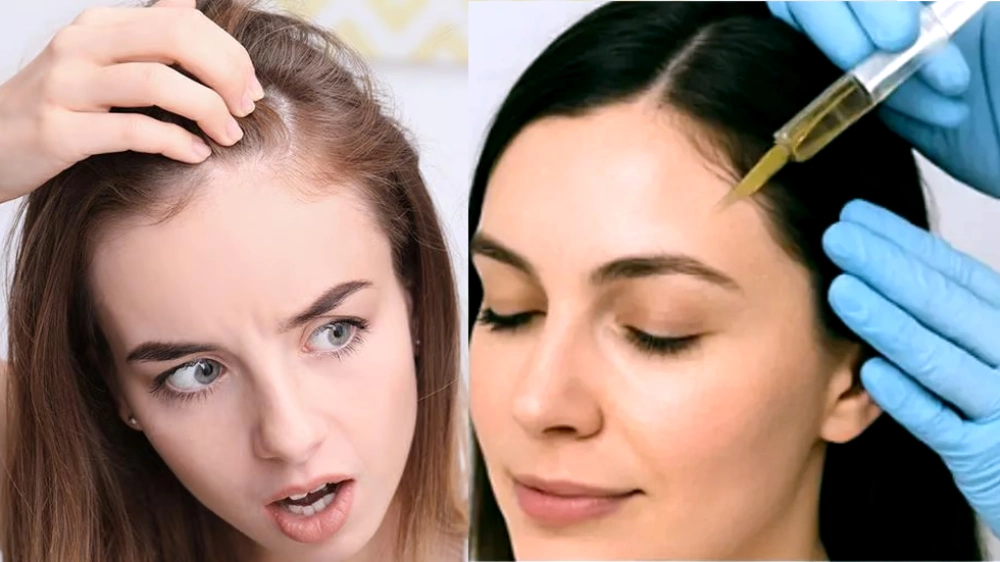
If you are someone suffering from hairloss, you musy have heaard about PRP for hair. Some call iy miracle cure, some call it meh!
A patient once told me she’d read three completely contradictory things about PRP for hair loss in the same week – a reel of Instagram calling it “the miracle cure,” one Reddit thread calling it “literally just an expensive placebo,” and one clinic’s website promising regrowth in 90 days, guaranteed. She wanted to know which one I agreed with.
None of them. The real answer sits in a much less dramatic middle ground, and given how often this comes up in my female hair thinning consultations and alongside our hair transplant discussions, it deserves a dedicated, honest look.
What PRP Actually Is
Platelet-rich plasma is exactly what it sounds like, your own blood, drawn in a small vial, spun in a centrifuge to concentrate the platelets, then injected back into your scalp. The theory is that platelets are packed with growth factors, and injecting a concentrated dose of them near hair follicles can stimulate dormant follicles back into an active growth phase.
Mechanistically, this isn’t hand-waving. Research on PRP’s biological activity shows it promotes follicular regeneration by triggering angiogenesis new blood vessel formation feeding the follicle.
Additionally activating several cellular signaling pathways (Wnt/β-catenin, MAPK, Akt/ERK, and Notch) that are known to play a role in hair growth cycling. So there’s a real, plausible biological mechanism here, which already puts PRP in a different category from something like a peel-off mask or a “hair growth” shampoo with no mechanism at all the kind of thing I cover in The Biggest Skincare Scams in India.
What the Actual Evidence Shows
This is where I want to be precise, because the PRP literature has genuinely improved in quality over the past few years, and it’s worth reflecting that accurately rather than either oversell or dismiss it.
A 2023 systematic review and meta-analysis published in JAMA Dermatology (via PubMed) pooled nine randomized controlled trials covering 238 patients with androgenetic alopecia, and found PRP significantly increased hair density at both 3 and 6 months compared with placebo (p < 0.05).
Another much recent and larger 2025 meta-analysis identified 43 randomized controlled trials involving nearly 1,900 participants and reached a similar conclusion PRP measurably increased hair density and reduced recurrence with one important nuance: activated PRP performed better than non-activated PRP, while non-activated preparations carried a higher rate of side effects.
The most recent 2026 review in the Journal of Cosmetic Dermatology summarized where the field currently stands: PRP shows genuine clinical benefit improved hair density, thickness, and patient satisfaction and the effect appears to be stronger when PRP is combined with existing evidence-based treatments like minoxidil or microneedling, rather than used as a sole standalone therapy.
A few honest caveats, because this is where I think most marketing quietly goes wrong:
Protocol variation is a real problem. A 2025 systematic review looking specifically at PRP as an adjunct to hair transplantation found consistent improvement in outcomes across studies, but flagged significant heterogeneity in how PRP was actually prepared concentration methods, activation techniques, and injection protocols varied considerably between clinics and studies, and there’s still no universally standardized “how much, how often, prepared exactly how” protocol.
This is androgenetic alopecia evidence specifically not a general hair-loss cure. Almost all of the strong trial data is on pattern hair loss (androgenetic alopecia). Evidence for other causes is much thinner: a 2026 randomized controlled trial looking at PRP for chemotherapy-induced and endocrine-related hair loss in breast cancer survivors described the evidence base for these specific conditions as still lacking, precisely because most existing research has focused on pattern baldness.
Activation method matters more than most patients realize. “Activated” PRP (where the platelets are chemically or mechanically triggered to release their growth factors before injection) consistently shows better outcomes and fewer side effects than non-activated PRP in head-to-head comparisons which means the specific protocol your clinic uses genuinely changes your odds, not just the fact that you’re “getting PRP” in general.
Who Actually Benefits
Based on where the evidence is strongest, PRP tends to work best for patients with early-to-moderate androgenetic alopecia meaningful hair thinning, but follicles that are still present and at least partially viable, rather than areas of complete, longstanding baldness where the follicles have been dormant for years. This lines up with what I see clinically: PRP is far more useful as an early intervention or as a booster alongside other treatments than as a rescue attempt for advanced hair loss.
It’s also increasingly used as an support to hair transplantation rather than a replacement for it. According to studies, PRP improves graft survival, hair density, and time to visible growth when used around transplant procedures, which is a meaningfully different use case from PRP as a standalone treatment.
If you’re weighing transplant versus non-surgical options generally, this is what you should know before you go out into that conversation something I unpack more broadly on our hair transplant page.
What PRP Is Not
PRP is not a replacement for identifying and addressing the underlying cause of hair loss. If your thinning is driven by PCOS, thyroid dysfunction, iron deficiency, or another systemic issue all of which I cover in detail in Female Hair Thinning: Causes & Solutions and which connect closely to my PCOS service page injecting growth factors into the scalp without correcting the root driver is treating a symptom while the underlying cause keeps working against you.
It’s also not a one-and-done procedure. Every trial protocol I’ve reviewed involves multiple sessions typically monthly for the first 3 months, then spaced out for maintenance because the effect on hair density builds gradually and isn’t permanent without continued treatment.
Patients who get one session and expect lasting results are, understandably, often disappointed; that expectation gap isn’t the treatment failing, it’s a mismatch between marketing and the actual evidence-based protocol.
Cost and What to Ask Before You Start
In the Indian market, PRP for hair typically runs somewhere in the range of ₹6,000–15,000 per session, depending on the clinic, the activation protocol used, and whether it’s combined with microneedling in the same sitting. Given the meaningful difference activated versus non-activated PRP makes to outcomes, I’d encourage anyone considering this to actually ask their provider which protocol they use, rather than assuming all “PRP for hair” offerings are clinically equivalent because based on the research, they genuinely aren’t.
What I Actually Tell Patients
If a patient has early-to-moderate androgenetic alopecia and wants to try PRP, I support it the evidence base has become genuinely reasonably solid, more so than for many aesthetic interventions I’m more skeptical about.
But I’m upfront about the framework: expect it to work best combined with minoxidil or other established treatments, not as a substitute for them; expect a multi-session course rather than a single visit; expect gradual density improvement rather than dramatic regrowth in areas that have been bald for years; and expect to need maintenance sessions to sustain any benefit.
What I don’t support is presenting PRP as a guaranteed fix, or using it as a first-line treatment before ruling out correctable causes like thyroid dysfunction, PCOS, or nutritional deficiencies because in those cases, fixing the actual driver often does more than any injection will.
Dr. Shruti Patil is a board-certified dermatologist and trichologist at Dr. Mahajan Skin To Bone Clinic, Pashim Vihar, New Delhi. She has particular experience combining PRP with other evidence-based hair loss treatments for female and male pattern hair thinning.
Wondering if PRP is the right fit for your hair loss, or want to explore non-surgical and surgical options together? Explore our hair fall and hair transplant services, or book an appointment with Dr. Mahajan’s Clinic for a personalized assessment.
Leave a Reply