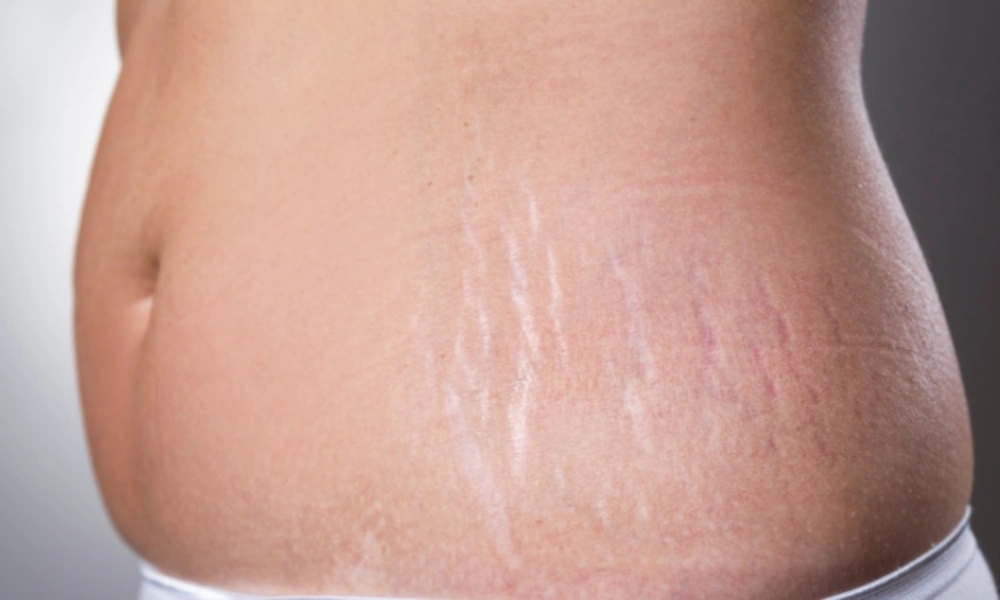
The tears started during Priya’s third trimester. Not emotional tears actual tears in her skin’s deeper layers, appearing as angry red-purple streaks across her abdomen and breasts.
“Will these ever go away?” she asked desperately, clutching her belly. “My mother said they’re permanent, my friends swear by expensive creams, and the internet promises miracle cures. What actually works?”
This confusion surrounds stretch marks more than almost any other skin concern I treat. Walk into any pharmacy in India, and you’ll find dozens of products promising to “prevent,” “remove,” or “erase” stretch marks.
Online, influencers promote everything from coffee scrubs to laser treatments.
Meanwhile, dermatologists know a harder truth: preventing stretch marks is difficult, and treating them is possible but requires realistic expectations.
As a dermatologist practicing in Delhi, I treat stretch marks daily – in pregnant women, rapidly growing teenagers, bodybuilders gaining muscle mass, and anyone who’s experienced significant weight changes.
The questions are always the same: Can I prevent them? If I already have them, can they be removed? What actually works versus expensive placebos?
Let me provide evidence-based answers that separate fact from marketing fiction, explain what genuinely helps, and set realistic expectations about what’s achievable with current treatments.
Understanding Stretch Marks: What Actually Happens
The Medical Reality
Striae distensae (medical term for stretch marks) are scars—not surface skin damage, but actual tears in the dermis (deeper skin layer) caused by rapid stretching that exceeds skin’s elastic capacity.
The mechanism:
- Rapid skin stretching from growth, weight gain, or pregnancy
- Collagen and elastin fibers tear in dermis
- Initially appear red/purple (striae rubrae) due to inflammation
- Gradually fade to white/silver (striae albae) as they mature
- Permanent structural changes in skin architecture
Why this matters: Because they’re scars in deeper skin layers, surface treatments have inherent limitations. You cannot cream away a scar, regardless of marketing claims.
Where They Appear
Common locations:
- Abdomen (pregnancy, weight gain)
- Breasts (pregnancy, puberty, weight changes)
- Hips and buttocks (growth spurts, weight gain)
- Thighs (weight changes, rapid muscle building)
- Upper arms (weight gain, bodybuilding)
- Lower back (growth spurts, weight gain)
Why these areas: Locations experiencing maximum stretch during body changes.
Types and Stages
Striae rubrae (early/active):
- Red, purple, or dark pink color
- Slightly raised texture
- May be itchy or slightly tender
- Present for weeks to months
- More responsive to treatment
Striae albae (mature/inactive):
- White, silver, or lighter than surrounding skin
- Depressed/indented texture
- No inflammation present
- Permanent coloration
- More resistant to treatment
Critical point: Treatment is most effective during the red/purple stage. Once white, options become more limited.
Our guide on aging in Indian skin explains how skin changes over time and why prevention is more effective than correction for many conditions.
Who Gets Stretch Marks and Why
Major Risk Factors
Pregnancy (50-90% of women):
- Rapid abdominal expansion
- Hormonal changes affecting skin elasticity
- Genetic predisposition major factor
- Usually appear third trimester
- Not determined by belly size or twins—genetics matter most
Adolescent growth spurts:
- Rapid height increase
- Particularly common in teenage boys (thighs, lower back)
- Teenage girls (breasts, hips, thighs)
- Often appear around puberty
Rapid weight gain:
- Sudden increases in body mass
- Body unable to produce collagen fast enough
- Can occur at any age
- Location varies with weight distribution pattern
Rapid weight loss (less common):
- Loose skin revealing underlying stretch marks
- Skin unable to contract quickly enough
- Often combined effect with previous weight gain
Bodybuilding and rapid muscle gain:
- Particularly in men
- Arms, shoulders, chest, thighs
- Rapid muscle volume increase stretches skin
Corticosteroid use:
- Oral steroids
- High-potency topical steroids used extensively
- Cushing’s syndrome
- Reduce collagen production and skin elasticity
Genetic disorders (rare):
- Marfan syndrome
- Ehlers-Danlos syndrome
- Other connective tissue disorders
Genetic Component
Why some people get them and others don’t:
- 50-90% heritability
- If your mother had pregnancy stretch marks, you’re more likely to develop them
- Ethnicity plays a role (more common in certain populations)
- Skin type and elasticity vary genetically
Indian skin considerations:
- Moderate to high risk for stretch marks
- Post-inflammatory hyperpigmentation common (darker stretch marks)
- Genetic predisposition varies by individual
- Family history most reliable predictor
Prevention: What Actually Works
The Honest Truth About Prevention
Reality check: No product or intervention guarantees prevention. If you’re genetically predisposed and experiencing rapid skin stretching, you’ll likely develop some stretch marks regardless of efforts.
However: Some strategies may reduce severity or quantity, particularly if you’re not strongly genetically predisposed.
Evidence-Based Prevention Strategies
Gradual weight changes:
- Avoid rapid weight gain when possible
- Slow, steady muscle building (not rapid bulking)
- Gradual weight loss
- Maintaining stable weight reduces risk
Adequate hydration:
- 8-10 glasses water daily
- Keeps skin supple and elastic
- Supports collagen production
- Essential but not miraculous
Nutrition for skin health:
- Vitamin C: Essential for collagen synthesis (citrus, bell peppers, strawberries)
- Vitamin E: Antioxidant supporting skin health (nuts, seeds, avocado)
- Vitamin A: Supports skin cell turnover (carrots, sweet potatoes, leafy greens)
- Zinc: Important for skin repair (pumpkin seeds, chickpeas, lentils)
- Protein: Building blocks for collagen (dal, paneer, eggs, chicken)
- Omega-3 fatty acids: Support skin barrier (walnuts, flax seeds, fish)
Regular moisturization:
- Keeps skin supple
- May improve elasticity marginally
- Prevents itching from stretching
- Choose thick, emollient formulations
Pregnancy-Specific Prevention
What research shows about pregnancy stretch marks:
- Genetics are the strongest predictor
- Staying within recommended weight gain may help slightly
- Younger maternal age = higher risk
- First pregnancy higher risk than subsequent
Moisturization during pregnancy:
- Conflicting evidence: Some studies show no benefit, others show slight reduction
- Practical benefits: Reduces itching, makes skin feel better
- Safe options: Cocoa butter, coconut oil, shea butter, specialized pregnancy creams
- Application: Twice daily to abdomen, breasts, hips, thighs
- Cost: ₹200-2,000 for pregnancy creams
Products with some research support:
- Centella asiatica (gotu kola) creams
- Hyaluronic acid-containing products
- Bitter almond oil (limited evidence)
- Cocoa butter (controversial—studies conflict)
Important pregnancy note: Results are modest even with products that show some benefit in studies. Genetic predisposition remains dominant factor.
What Doesn’t Prevent Stretch Marks
Despite marketing claims:
- No cream or oil guarantees prevention
- Expensive products not necessarily more effective
- “Stretch mark prevention” creams may be standard moisturizers with markup
- Coffee scrubs, dry brushing, and massage have no proven preventive benefit
- Supplements marketed for stretch marks lack solid evidence
Our skincare scams guide helps identify products making false promises versus those with genuine benefits.
Treatment Options: Setting Realistic Expectations
The Critical Truth
No treatment completely removes stretch marks. They’re permanent scars. However, treatments can:
- Reduce visibility significantly
- Improve texture and color
- Make them blend better with surrounding skin
- Boost confidence and appearance
Best results: Early treatment during red/purple stage. White stretch marks are more resistant but can still improve.
Topical Treatments
Tretinoin (Prescription Retinoid):
- Mechanism: Stimulates collagen production, increases cell turnover
- Evidence: Best studied topical, modest improvement in early stretch marks
- Effectiveness: May improve appearance of red stretch marks by 20-40%
- Application: Nightly for several months
- Cost: ₹100-400 (extremely affordable)
- Limitations: Not for pregnancy/breastfeeding, minimal effect on white marks
- Side effects: Irritation, dryness, sun sensitivity
Hyaluronic Acid:
- Mechanism: Hydrates skin, may support collagen
- Evidence: Limited but some positive studies
- Effectiveness: Minimal but safe
- Application: Twice daily
- Cost: ₹600-2,500
Centella Asiatica (Gotu Kola):
- Mechanism: May support collagen synthesis
- Evidence: Some studies show benefit during pregnancy prevention
- Effectiveness: Modest at best
- Application: Twice daily
- Cost: ₹400-1,500
Vitamin E:
- Evidence: Controversial, mixed results
- Effectiveness: Likely minimal
- Safety: Generally safe but some people react
- Cost: ₹200-800
Cocoa Butter, Coconut Oil, Bio-Oil:
- Evidence: Minimal to none for stretch mark treatment
- Effectiveness: May improve skin texture and hydration generally
- Benefit: Makes skin feel better, reduces itching
- Reality: More about general moisturization than specific stretch mark treatment
- Cost: ₹200-1,200
Silicone Gel Sheets:
- Mechanism: Hydration and pressure on scars
- Evidence: Some benefit for scars generally
- Effectiveness: Limited specific data for stretch marks
- Application: Applied over stretch marks for hours daily
- Cost: ₹500-2,000
Honest assessment: Topical treatments provide modest benefits at best. Prescription tretinoin most effective but still limited results.
Professional Treatments (More Effective Options)
Microneedling:
- Mechanism: Creates controlled micro-injuries stimulating collagen production
- Effectiveness: 25-50% improvement in appearance with series of treatments
- Protocol: 4-6 sessions, 4-6 weeks apart
- Best for: Red or white stretch marks
- Downtime: Minimal, redness 1-2 days
- Cost: ₹4,000-10,000 per session
- Results: Gradual improvement over 3-6 months
- Pain level: Tolerable with topical anesthetic
Microneedling with PRP (Platelet-Rich Plasma):
- Mechanism: Combines microneedling with growth factors from your blood
- Effectiveness: Better than microneedling alone (40-60% improvement)
- Protocol: 4-6 sessions
- Cost: ₹6,000-15,000 per session
- Evidence: Growing research support
- Best for: Motivated patients willing to invest
Fractional Laser Treatments:
- Mechanism: Creates microscopic treatment zones stimulating collagen
- Types: Fractional CO2, fractional erbium, non-ablative fractional
- Effectiveness: 30-70% improvement (varies by laser type)
- Protocol: 3-5 sessions, 4-8 weeks apart
- Best for: White stretch marks (most effective treatment for mature marks)
- Downtime: 3-7 days depending on laser type
- Cost: ₹8,000-25,000 per session
- Results: Progressive improvement over months
- Considerations: Requires expertise for Indian skin (hyperpigmentation risk)
Radiofrequency (RF) Treatments:
- Mechanism: Heat stimulates collagen production, tightens skin
- Effectiveness: 25-40% improvement
- Protocol: 4-6 sessions
- Best for: Mild to moderate stretch marks, skin tightening
- Downtime: None to minimal
- Cost: ₹5,000-15,000 per session
- Advantage: Safe for all skin types including Indian skin
Carboxytherapy:
- Mechanism: CO2 injections improve circulation and collagen
- Effectiveness: 30-50% improvement reported
- Protocol: 6-10 sessions
- Best for: Red stretch marks
- Downtime: Minimal
- Cost: ₹3,000-8,000 per session
- Availability: Less common in India
Chemical Peels (Limited Role):
- Mechanism: Exfoliation and collagen stimulation
- Effectiveness: Minimal for stretch marks specifically
- Better for: Surface texture, overall skin quality
- Cost: ₹2,500-6,000 per session
- Reality: Not primary treatment for stretch marks
Our comprehensive guide on chemical peels vs. laser treatments explains differences in these approaches for various concerns.
Combination Approaches (Most Effective)
Why combinations work better:
- Address stretch marks through multiple mechanisms
- Faster, more significant results
- Synergistic benefits
Effective combinations:
- Microneedling + PRP + topical tretinoin (home care)
- Fractional laser + radiofrequency
- Microneedling + topical retinoid + chemical peels
- Any professional treatment + consistent home care
Example protocol:
- Microneedling with PRP: 4-6 sessions over 6 months
- Home tretinoin: Nightly on non-treatment days
- Moisturization: Twice daily with hyaluronic acid
- Expected improvement: 40-60% reduction in visibility
What Doesn’t Work (Despite Claims)
Ineffective or unproven treatments:
- Dermarollers at home (insufficient depth, infection risk)
- Coffee scrubs
- Sugar scrubs
- Dry brushing
- Essential oils alone
- Massage alone
- Aloe vera alone
- “Stretch mark removal creams” (marketing, not medicine)
Potentially harmful:
- Aggressive home microneedling (scarring, infection)
- Unqualified providers offering laser treatments
- DIY chemical peels (burns, scarring)
Treatment by Stretch Mark Age and Color
Early Red/Purple Stretch Marks (Best Treatment Window)
Why treat now: Most responsive stage, easier to improve.
Recommended approach:
- First line: Topical tretinoin (prescription)
- Enhancement: Microneedling series (4-6 sessions)
- Budget option: Tretinoin alone with consistent moisturization
- Aggressive approach: Microneedling + PRP + tretinoin
- Expected results: 40-70% improvement possible
Timeline: Begin treatment as soon as stretch marks appear.
Mature White/Silver Stretch Marks (More Challenging)
Reality: More resistant to treatment, deeper intervention needed.
Recommended approach:
- Gold standard: Fractional laser treatments (3-5 sessions)
- Alternative: Microneedling with PRP (4-6 sessions)
- Budget option: Microneedling alone (modest improvement)
- Combination: Laser + microneedling alternating
- Expected results: 30-50% improvement with aggressive treatment
Important: Complete removal not possible, but significant improvement achievable.
Post-Pregnancy Stretch Marks
Timeline considerations:
- Wait until after breastfeeding for tretinoin
- Can begin other treatments earlier
- Often red initially, gradually fading to white
Recommended protocol:
- During breastfeeding: Moisturization, safe products only
- After breastfeeding: Begin tretinoin
- 6+ months post-delivery: Consider professional treatments
- Realistic timeline: 1-2 years for maximum improvement with treatment
Bodybuilding/Rapid Muscle Gain Stretch Marks
Common locations: Arms, shoulders, chest, thighs
Recommended approach:
- Prevention: Slower muscle building
- Treatment: Same as other stretch marks (tretinoin, microneedling, lasers)
- Consideration: May recur with continued rapid muscle gain
Treatment Selection Guide
Choosing Based on Budget
Budget-conscious (₹3,000-10,000 total):
- Prescription tretinoin (₹100-400)
- Consistent application for 6-12 months
- Add budget moisturizer with hyaluronic acid
- Expected improvement: 15-30%
Moderate budget (₹25,000-60,000):
- Microneedling series: 4-6 sessions
- Tretinoin for home use
- Quality moisturizers
- Expected improvement: 30-50%
Higher budget (₹60,000-1,50,000):
- Fractional laser: 3-5 sessions
- Microneedling with PRP: 4-6 sessions
- Tretinoin maintenance
- Comprehensive approach
- Expected improvement: 40-70% (depending on stretch mark age)
Choosing Based on Downtime
No downtime acceptable:
- Topical tretinoin
- Radiofrequency treatments
- Gentle microneedling
- Results: Slower, more modest
Minimal downtime acceptable (2-3 days):
- Standard microneedling
- Non-ablative fractional lasers
- Results: Moderate improvement
Moderate downtime acceptable (5-7 days):
- Fractional CO2 laser
- More aggressive treatments
- Results: Best improvement possible
Choosing Based on Stretch Mark Location
Abdomen (post-pregnancy most common):
- All treatments suitable
- Large area may increase cost
- Consider combination approaches
Breasts:
- Gentle microneedling
- Non-ablative lasers
- Avoid aggressive treatments (sensitive area)
Thighs, buttocks, arms:
- All treatments appropriate
- Consider extent of area for cost
Special Considerations
Pregnancy and Breastfeeding
Safe options during pregnancy:
- Moisturization only
- No tretinoin, chemical peels, or professional treatments
- Focus on prevention where possible
Safe options during breastfeeding:
- Moisturization
- Professional treatments (microneedling, lasers) safe as they’re not systemic
- Avoid tretinoin until after breastfeeding
Best timing for treatment:
- Wait until family planning complete if possible
- Otherwise, after breastfeeding cessation
Teenagers with Growth-Related Stretch Marks
Psychological impact: Can be significant, affecting self-esteem.
Treatment approach:
- Reassurance that common and normal
- Topical tretinoin if appropriate for age
- Professional treatments if motivated
- Address body image concerns
Considerations: May continue developing new stretch marks if still growing.
Stretch Marks on Darker Skin (Indian Skin Specific)
Special concerns:
- Higher risk of post-inflammatory hyperpigmentation
- Darker appearance of stretch marks themselves
- Requires expertise in treating ethnic skin
Treatment modifications:
- Conservative laser settings essential
- Test spots before full treatment
- Longer intervals between treatments
- Careful provider selection crucial
Safe options for Indian skin:
- Microneedling (safest professional option)
- Nd:YAG lasers (specific wavelength safer for darker skin)
- Fractional lasers with expertise
- Avoid aggressive ablative treatments
Our guides on Indian skin aging and dark circles in Indian skin explain why ethnic skin requires specialized approaches.
Realistic Expectations and Success Metrics
What “Success” Looks Like
Understand these truths:
- 100% removal impossible
- 30-70% improvement realistic with treatment
- “Improvement” means less visible, not invisible
- Texture improves, color fades, but marks remain
Measuring success:
- Photographs (same lighting, angles) every 2 months
- Texture assessment (smoother to touch)
- Color changes (less contrast with surrounding skin)
- Personal satisfaction (feel better about appearance)
Timeline for Results
Topical tretinoin alone:
- Minimum 3-6 months consistent use
- Modest improvement
- Maintenance required
Microneedling series:
- 4-6 treatments over 6 months
- Progressive improvement
- Final results at 6 months post-treatment
Laser treatments:
- 3-5 sessions over 6-12 months
- Gradual improvement
- Final results 3-6 months after last session
Combination approaches:
- 6-12 month commitment
- Best results
- Maintenance may be beneficial
When to Stop Pursuing Treatment
Consider stopping if:
- No improvement after appropriate treatment course
- Financial or time burden too high
- Results plateau
- Side effects outweigh benefits
- Satisfaction achieved even if not complete removal
Acceptance: Some stretch marks may never improve significantly. Focusing on overall health and self-acceptance sometimes more valuable than endless treatment pursuit.
Cost-Benefit Analysis
Investment Perspective
Tretinoin (Best value for money):
- Cost: ₹100-400 for 2-3 months
- Time: 6-12 months
- Improvement: 15-30%
- Value: Excellent for budget-conscious
Microneedling:
- Cost: ₹16,000-60,000 for series
- Time: 6 months
- Improvement: 30-50%
- Value: Good for moderate budget
Laser treatments:
- Cost: ₹24,000-1,25,000 for series
- Time: 6-12 months
- Improvement: 40-70%
- Value: Best results but highest cost
Combination protocols:
- Cost: ₹40,000-2,00,000+
- Time: 12+ months
- Improvement: 50-70%
- Value: Maximum results for those who can invest
Hidden Costs to Consider
Time investment:
- Treatment sessions
- Recovery/downtime
- Travel to clinic
- Home care application
Maintenance:
- Some treatments need periodic upkeep
- Home products (tretinoin, moisturizers)
- Sun protection essential
Opportunity costs:
- Money spent on stretch marks vs. other priorities
- Emotional energy focused on appearance
Prevention and Treatment: Pregnancy Timeline
Pre-Pregnancy Preparation
If planning pregnancy:
- Achieve healthy weight before conception
- Optimize nutrition
- Build healthy skin with good care
- Understand genetic risk based on family history
During Pregnancy
First trimester:
- Begin gentle moisturization
- Establish healthy weight gain pattern
- Stay hydrated
- Nutritious diet supporting skin health
Second trimester:
- Intensive moisturization 2x daily
- Watch for early stretch marks
- Continue healthy weight gain
- Avoid rapid weight spikes
Third trimester (most stretch marks appear):
- Maximum moisturization
- Manage itching if present
- Accept that genetics play major role
- Focus on baby’s health, not appearance perfection
Post-Pregnancy Treatment
0-6 months (breastfeeding typically):
- Moisturization only
- Professional treatments safe (not systemic)
- No tretinoin until after breastfeeding
- Focus on recovery and baby care
6-12 months (after breastfeeding):
- Begin tretinoin if desired
- Consider professional treatments
- Assess if additional pregnancies planned
- Realistic goal-setting
12+ months:
- Aggressive treatment if desired and affordable
- Maximum intervention possible
- Combination approaches
- Final stretch mark appearance established
Living with Stretch Marks: The Bigger Picture
Body Acceptance and Mental Health
The reality: Most adults have stretch marks somewhere. They’re normal, common, and nothing to be ashamed of.
Psychological considerations:
- Society’s unrealistic beauty standards
- Filtered social media images
- Pressure to have “perfect” skin
- Impact on self-esteem and relationships
Building acceptance:
- Recognize stretch marks as normal
- Focus on overall health, not appearance perfection
- Challenge unrealistic media representations
- Seek support if significantly distressed
When to seek help:
- Depression or anxiety about appearance
- Avoiding activities due to stretch marks
- Relationship impact
- Obsessive focus on appearance
Cultural Perspectives in India
Traditional views:
- Pregnancy stretch marks as “motherhood medals”
- Varying acceptance across generations
- Social pressure around appearance
- Wedding and social event concerns
Modern pressures:
- Social media perfect bodies
- Celebrity post-pregnancy “bounce backs”
- Unrealistic expectations
- Beauty industry marketing
Finding balance:
- Cultural acceptance where it exists
- Personal choice in pursuing treatment
- Rejecting impossible standards
- Focus on health over appearance
When to See a Dermatologist
Initial Consultation Recommended For
Any stretch marks if:
- Desire professional treatment
- Uncertain about prevention strategies
- Want realistic assessment of improvement potential
- Considering expensive treatments (get expert opinion first)
- Pregnant and concerned about prevention
Definitely consult if:
- Stretch marks appearing without clear cause (rule out medical conditions)
- Very extensive stretch marks in unusual patterns
- Associated symptoms (weight changes, other skin issues)
- Psychological distress about appearance
Our guide on dermatologist vs. beautician explains why medical expertise matters for treatment decisions.
What to Expect in Consultation
Comprehensive assessment:
- Stretch mark age, extent, location
- Skin type and tone evaluation
- Medical and medication history
- Realistic improvement potential
- Treatment options and costs
- Expected timeline and results
Honest discussion about:
- What’s achievable vs. marketing promises
- Cost-benefit of various approaches
- Your specific goals and priorities
- Alternatives to treatment (acceptance, camouflage)
Common Mistakes to Avoid
Mistake #1: Believing Products Claiming “Removal”
The problem: No cream removes stretch marks.
The reality: Topical products provide modest improvement at best, never “removal.”
Mistake #2: Waiting Too Long
The problem: Delaying treatment until marks are fully white.
The reality: Best results from treating red/purple marks early.
Mistake #3: Wasting Money on Unproven Products
The problem: Expensive “miracle” creams, scrubs, and supplements.
The reality: Evidence supports very few products; most are overpriced moisturizers.
Mistake #4: DIY Aggressive Treatments
The problem: Home microneedling, chemical peels, lasers.
The reality: Risk of scarring, infection, worsening appearance. Professional treatment essential.
Mistake #5: Expecting Quick Results
The problem: Wanting immediate improvement.
The reality: All treatments require months to see results.
Mistake #6: Ignoring Prevention
The problem: Focusing only on treatment after stretch marks develop.
The reality: While prevention isn’t guaranteed, simple measures (gradual weight changes, moisturization, nutrition) may help.
Conclusion: Realistic Hope, Not False Promises
Stretch marks are permanent scars that cannot be completely removed. This is the truth that many products and providers avoid stating clearly. However, this doesn’t mean you’re powerless or that treatment is futile.
The realistic picture:
- Prevention strategies may help if you’re not strongly genetically predisposed
- Early treatment during red/purple stage offers best results
- Professional treatments can improve appearance by 30-70%
- Topical tretinoin provides modest improvement affordably
- White stretch marks can still improve with aggressive treatment
- Complete removal isn’t possible, but significant improvement is
Your action plan:
- If preventing: Gradual weight changes, good nutrition, hydration, moisturization
- If treating early marks: Tretinoin + professional treatments for best results
- If treating white marks: Realistic expectations, professional treatments, patience
- Always: Work with qualified dermatologist, not beauticians or unqualified providers
The most important truth: You are more than your stretch marks. Whether you choose to pursue treatment, accept them as they are, or something in between, the decision is personal and valid.
Stretch marks don’t define your worth, beauty, or health. They’re simply evidence that your body changed—through growth, pregnancy, or life experiences. Treatment is available for those who want it, but acceptance is equally valid.
Dr. Shruti Patil is a board-certified dermatologist at Dr. Mahajan Skin To Bone Clinic, Pashim Vihar, New Delhi. With extensive experience treating stretch marks across diverse patient populations using evidence-based approaches, she provides realistic assessments and personalized treatment protocols that deliver genuine improvement rather than false promises.
Concerned about stretch marks or want to explore treatment options? Schedule a consultation for honest assessment of your specific situation and personalized recommendations based on evidence, not marketing hype.
Leave a Reply