
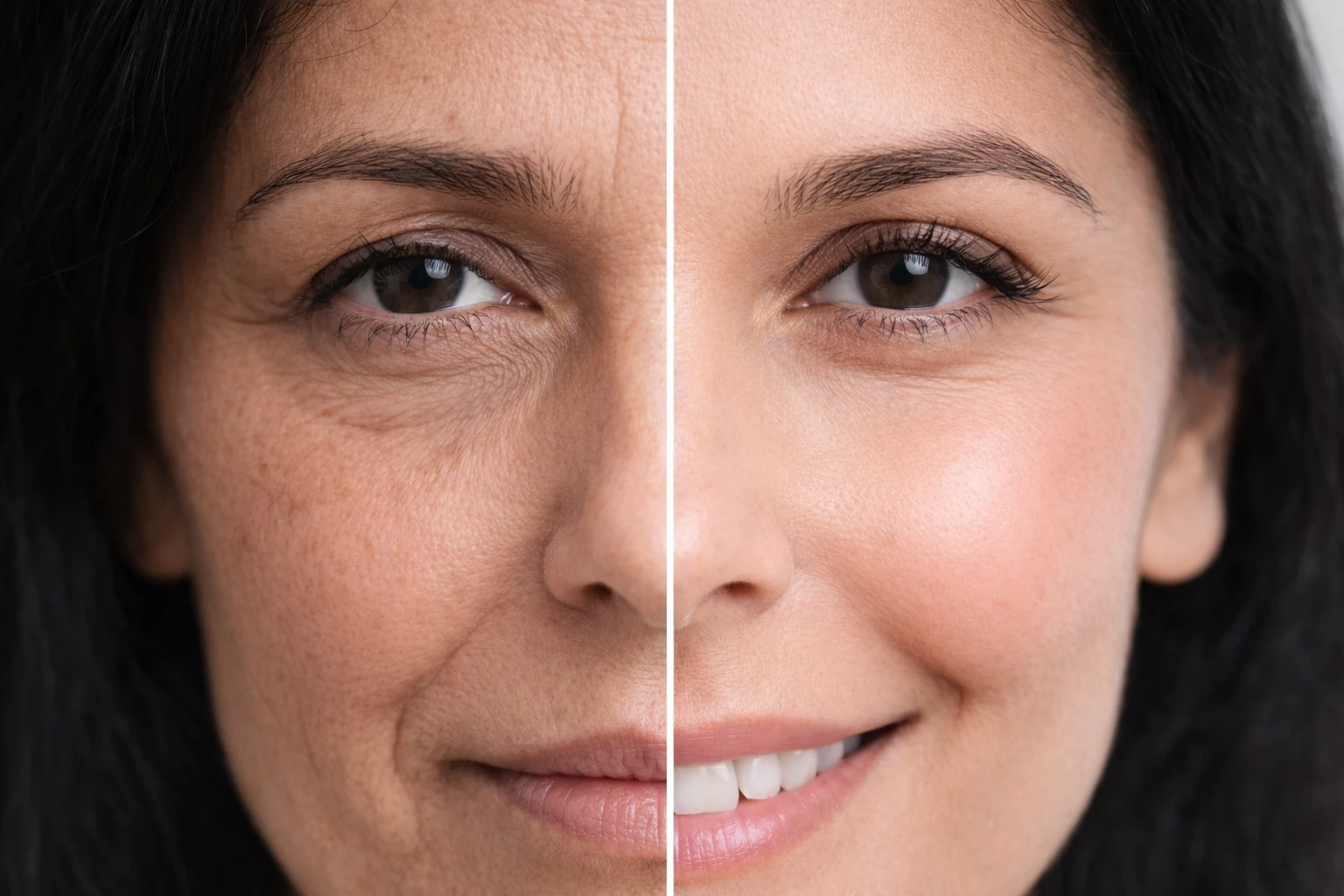
Aging doesn’t announce itself with wrinkles in Indian skin. Walk into my dermatology clinic in Delhi, and you’ll hear the same concerns from patients in their late 20s and early 30s: “My skin looks dull,” “I have dark patches appearing,” “My under-eyes look so tired,” “I’ve lost my glow.” Wrinkles? They come later often much later than in lighter skin tones.
This fundamental difference in how Indian skin ages requires a completely different approach to anti-aging care. The Western skincare industry focuses heavily on wrinkles, retinol, and collagen but these address problems that aren’t our primary concerns. For Indian skin, aging manifests first as loss of glow, uneven skin tone, patchy pigmentation, and under-eye darkness. These changes make your skin look tired even before wrinkles appear.
Understanding this distinction determines whether your anti-aging routine actually works or wastes your money on products addressing the wrong problems.
How Indian Skin Ages Differently
The Melanin Factor
Indian skin contains significantly more melanin than Caucasian skin—our evolutionary advantage for sun protection. This affects aging in specific ways:
What we get right:
- Natural SPF 13-15 from melanin (vs. SPF 3-4 in fair skin)
- Later wrinkle formation (typically 5-10 years later than Caucasian skin)
- Less susceptibility to skin cancer
What creates challenges:
- Higher propensity for hyperpigmentation from any inflammation
- Uneven melanin distribution causing patchy skin tone
- Post-inflammatory hyperpigmentation lasting months or years
- Visible aging appearing as pigmentation rather than wrinkles
The Aging Timeline in Indian Skin
Ages 25-35: Loss of radiance and glow
- Skin appears dull, tired
- Uneven texture developing
- First signs of pigmentation
- Under-eye darkness intensifying
- Wrinkles minimal or absent
Ages 35-45: Pigmentation becomes prominent
- Dark patches on cheeks, forehead
- Melasma developing or worsening
- Significant under-eye concerns
- Loss of skin firmness beginning
- Fine lines just starting to appear
Ages 45-55: Combination concerns
- Established pigmentation patterns
- Visible texture changes
- Moderate wrinkles finally appearing
- Skin laxity becoming noticeable
- Volume loss in specific areas
Ages 55+: Multiple aging signs
- Wrinkles more prominent
- Significant pigmentation
- Textural changes
- Volume loss
- Sagging
The key difference: A 35-year-old Indian woman typically worries about pigmentation and dullness, while a 35-year-old Caucasian woman worries about crow’s feet and forehead lines. Same age, completely different concerns.
Our comprehensive guide on dark circles in Indian skin explores how pigmentation issues manifest specifically around the eyes.
What Speeds Up Aging in Indian Skin
1. Pollution (The Delhi Reality)
“Pollution, sun exposure, poor sleep and stress, even inconsistent skincare routine can lead to dullness, dryness, pigmentation and loss of glow and then which leads to wrinkles.”
Delhi’s pollution creates unique aging acceleration:
Particulate matter (PM2.5 and PM10):
- Generates free radicals damaging skin cells
- Triggers inflammatory responses
- Causes oxidative stress accelerating aging
- Creates visible dullness and grayish tone
Heavy metals and chemicals:
- Disrupt skin barrier function
- Trigger pigmentation responses
- Damage collagen and elastin
- Accumulate over time
The cumulative effect: Each day of pollution exposure adds to oxidative stress. A 30-year-old in Delhi may have skin damage equivalent to a 35-40 year old in less polluted cities.
Our Delhi pollution skincare guide provides comprehensive strategies for environmental protection year-round, while our winter skincare guide addresses peak pollution months.
2. Sun Exposure (Year-Round UV Intensity)
India’s geographic location means intense UV exposure throughout the year:
UVA rays (aging rays):
- Penetrate deep into skin
- Break down collagen and elastin
- Trigger melanin production
- Present even on cloudy days
UVB rays (burning rays):
- Cause surface damage
- Trigger immediate pigmentation
- Vary by season and time of day
Indian skin vulnerability: Despite natural melanin protection, chronic sun exposure overwhelms our defenses, causing:
- Premature pigmentation
- Uneven skin tone
- Accelerated photoaging
- Melasma development
3. Poor Sleep and Stress
Sleep deprivation effects:
- Elevates cortisol (stress hormone)
- Increases inflammation
- Reduces skin repair and regeneration
- Accelerates visible aging
Chronic stress impact:
- Triggers inflammatory responses
- Worsens existing pigmentation
- Disrupts skin barrier function
- Accelerates overall aging process
The Indian context: High-stress work environments, family responsibilities, and urban lifestyle create chronic stress affecting skin health.
4. Inconsistent Skincare Routines
The pattern I see: Patients use products sporadically, try new trends constantly, or give up when results aren’t immediate.
Why consistency matters:
- Skin cell turnover takes 28-40 days
- Active ingredients need sustained use for results
- Barrier health requires continuous support
- Prevention requires daily commitment
Common mistakes:
- Using products only when problems appear
- Switching products every few weeks
- Skipping sunscreen on cloudy days or indoors
- Following trends rather than proven science
5. Incorrect Product Choices
Western products not addressing Indian concerns:
- Focus on wrinkle reduction (our later concern)
- Ignore pigmentation management (our primary concern)
- Formulated for different climates
- Don’t address pollution protection
The scam factor: Many products marketed in India make false promises. Our skincare scams guide helps identify effective products versus marketing hype.
The Right Anti-Aging Strategy for Indian Skin
Priority #1: Sun Protection (Non-Negotiable)
“Focus on sun protection and barrier repair early on. Daily sunscreen even indoors.”
Why indoors too:
- UVA penetrates windows
- Blue light from screens (limited evidence but emerging concern)
- Consistent protection prevents cumulative damage
Sunscreen selection for Indian skin:
- Minimum SPF 30, ideally 50
- Broad-spectrum (UVA and UVB)
- PA++++ for UVA protection
- Lightweight formulations for humid climate
- Tinted options with iron oxides (additional pigmentation protection)
Application rules:
- ¼ teaspoon for face (nickel-sized amount)
- Apply 15 minutes before sun exposure
- Reapply every 2-3 hours outdoors
- Don’t skip on cloudy or winter days
Cost: ₹500-2,000 for quality sunscreen lasting 2-3 months
Investment perspective: Sunscreen prevents more aging than any anti-aging cream can reverse. This is your most important product.
Priority #2: Antioxidant Protection
“Take antioxidants, regular exfoliation and hydration.”
Why antioxidants are crucial:
- Neutralize free radicals from pollution and UV
- Prevent oxidative damage
- Brighten skin and improve radiance
- Support barrier function
Best antioxidants for Indian skin:
Vitamin C (L-Ascorbic Acid):
- Brightens skin, reduces pigmentation
- Stimulates collagen production
- Provides antioxidant protection
- Use stable formulations (oxidizes easily)
- Cost: ₹800-3,000
Niacinamide (Vitamin B3):
- Reduces pigmentation and dark spots
- Strengthens barrier function
- Regulates oil production
- Anti-inflammatory properties
- Cost: ₹600-2,000
Vitamin E:
- Works synergistically with vitamin C
- Protects against environmental damage
- Supports skin barrier
- Often combined with other antioxidants
Resveratrol and Green Tea Extract:
- Powerful pollution protection
- Anti-inflammatory effects
- Available in serums and creams
- Cost: ₹1,000-3,000
Application: Morning routine after cleansing, before sunscreen. Vitamin C and niacinamide can be used together despite old myths.
Priority #3: Barrier Repair and Hydration
Why barrier health matters for aging:
- Damaged barriers accelerate aging
- Compromised barriers allow pollution penetration
- Healthy barriers maintain skin plumpness
- Barrier dysfunction causes dullness
Essential barrier repair ingredients:
Ceramides:
- Lipid molecules naturally present in skin
- Restore barrier structure
- Prevent water loss
- Critical for Indian skin exposed to pollution
Hyaluronic Acid:
- Holds 1000x its weight in water
- Multiple molecular weights for different skin layers
- Provides immediate plumping
- Reduces appearance of fine lines
Niacinamide (multitasker):
- Strengthens barrier
- Reduces pigmentation
- Regulates oil
- Anti-inflammatory
Peptides:
- Signal skin to produce collagen
- Support barrier function
- Improve firmness and elasticity
Cost for quality products: ₹1,000-4,000 for serums and moisturizers
Priority #4: Regular Exfoliation
Why exfoliation fights Indian skin aging:
- Removes dull, pigmented surface cells
- Improves product penetration
- Stimulates cell renewal
- Enhances radiance immediately
Chemical exfoliation (preferred):
AHAs (Alpha Hydroxy Acids):
- Glycolic acid: Brightest, most studied
- Lactic acid: Gentler, hydrating
- Mandelic acid: Best for Indian skin (gentle, anti-bacterial)
- Use 2-3 times weekly
- Start with low concentration (5-8%)
BHAs (Beta Hydroxy Acids):
- Salicylic acid: Oil-soluble, penetrates pores
- Best for oily, acne-prone skin
- Use 2-3 times weekly
Combination approaches:
- Some products combine AHA and BHA
- Professional peels (monthly or bi-monthly)
- Adjust frequency based on skin tolerance
Cost: ₹600-2,500 for quality exfoliating products
Caution: Over-exfoliation damages barrier and worsens pigmentation. Start slowly, increase gradually based on tolerance.
Priority #5: Target Pigmentation Early
“Target pigmentation early on before it becomes stubborn.”
Why early intervention matters:
- Fresh pigmentation responds faster
- Prevents deepening and spreading
- Easier to treat than established melasma
- Prevents cumulative damage
Effective pigmentation treatments:
Topical treatments:
- Hydroquinone (2-4%, prescription): Gold standard
- Kojic acid: Natural alternative
- Arbutin: Gentle option
- Tranexamic acid: Newer, effective option
- Vitamin C: Brightening and prevention
Professional treatments:
- Chemical peels (glycolic, mandelic, kojic acid)
- Laser treatments (Q-switched, fractional)
- Microneedling with brightening serums
- Combination approaches for stubborn cases
Cost range: ₹500-3,000 for topicals, ₹2,500-15,000 for professional treatments
For comprehensive pigmentation treatment information, our pigmentary disorders guide explores various approaches and realistic expectations.
Priority #6: Professional Evaluation
“Get evaluated your skin from your dermatologist and start your skincare routine now.”
Why professional assessment matters:
- Accurate skin typing and concern identification
- Personalized treatment recommendations
- Access to prescription-strength products
- Professional treatments not available over-counter
- Monitoring and adjustment based on progress
What to expect in consultation:
- Detailed skin analysis
- Discussion of concerns and goals
- Review of current routine
- Customized treatment plan
- Realistic timeline and expectations
When to schedule:
- Before investing in expensive products
- When home care isn’t delivering results
- For persistent pigmentation or other concerns
- Annually for skin health monitoring
- Before major life events (weddings, etc.)
Cost: ₹1,000-3,000 for consultation, invaluable for preventing wasted money on wrong products
The Indian Skin Anti-Aging Routine
Morning Routine (Prevention Focus)
Step 1: Gentle cleansing
- Lukewarm water
- pH-balanced, gentle cleanser
- Cost: ₹400-1,200
Step 2: Antioxidant serum
- Vitamin C or niacinamide
- Apply to slightly damp skin
- Cost: ₹800-2,500
Step 3: Hydration
- Hyaluronic acid serum or hydrating toner
- Cost: ₹600-2,000
Step 4: Moisturizer with barrier repair
- Ceramide-containing formula
- Lightweight for daytime
- Cost: ₹800-2,500
Step 5: Sunscreen (THE most important)
- SPF 50, broad-spectrum
- Reapply every 2-3 hours if outdoors
- Cost: ₹500-2,000
Total morning investment: ₹3,100-10,200 for products lasting 2-3 months
Evening Routine (Repair and Treatment)
Step 1: Double cleanse
- Oil cleanser first (removes sunscreen, pollution)
- Water-based cleanser second
- Cost: ₹800-2,500 combined
Step 2: Exfoliation (2-3x weekly)
- AHA or BHA product
- Skip retinoid on exfoliation nights initially
- Cost: ₹600-2,000
Step 3: Treatment products
- Pigmentation serums (hydroquinone, kojic acid, etc.)
- OR Retinoid (start low concentration)
- Apply to dry skin
- Cost: ₹1,000-4,000
Step 4: Hydration
- Hyaluronic acid or hydrating serum
- Cost: ₹600-2,000
Step 5: Rich moisturizer
- Barrier repair ingredients
- Heavier formula than morning
- Cost: ₹1,000-3,500
Step 6: Eye cream (optional but beneficial)
- Addresses under-eye darkness, puffiness
- Cost: ₹800-3,000
Total evening investment: ₹4,800-17,000 for products lasting 2-3 months
Weekly Additions
Deep conditioning mask (once weekly):
- Hydration boost
- Barrier support
- Cost: ₹800-2,500
Scalp and hair care (skin aging appears on scalp too):
- Regular oiling and proper cleansing
- Pollution protection
- Our winter hair care guide provides comprehensive strategies
Professional Treatments Worth Considering
Chemical Peels (Every 4-6 Weeks)
Best for Indian skin:
- Mandelic acid (gentle, effective for pigmentation)
- Glycolic acid (brightening, texture improvement)
- Kojic acid (specific for pigmentation)
- Combination peels for comprehensive benefits
Benefits:
- Immediate glow and radiance
- Progressive pigmentation reduction
- Improved texture and tone
- Enhanced product penetration
Cost: ₹2,500-6,000 per session
Laser Treatments
Q-switched lasers (for pigmentation):
- Target melanin deposits
- Minimal downtime
- Requires expertise with darker skin
- Cost: ₹5,000-15,000 per session
Fractional lasers (for texture and tone):
- Stimulate collagen production
- Improve overall skin quality
- Require proper aftercare
- Cost: ₹8,000-25,000 per session
Caution: Lasers on Indian skin require experienced practitioners to avoid complications like post-inflammatory hyperpigmentation.
Microneedling with Growth Factors
Benefits for Indian skin:
- Collagen stimulation
- Improved product penetration
- Minimal hyperpigmentation risk
- Addresses multiple concerns
Cost: ₹4,000-10,000 per session
Botox and Fillers (Later Concerns)
When to consider:
- Once wrinkles actually appear (typically 40+)
- For specific dynamic lines
- Under expert guidance
For comprehensive information about Botox, our Botox treatment guide explains the process and realistic expectations.
Our anti-aging treatment guide explores various professional options and when to consider each.
Budget-Conscious Anti-Aging for Indian Skin
Essential Investments (₹3,000-5,000 monthly)
Must-haves:
- Quality sunscreen (₹500-1,500)
- Vitamin C or niacinamide serum (₹800-2,000)
- Basic moisturizer with ceramides (₹600-1,500)
- Gentle cleanser (₹400-1,000)
- Pigmentation treatment if needed (₹700-2,000)
Total: Adequate for basic protection and prevention
Mid-Range (₹6,000-10,000 monthly)
Enhanced routine:
- Premium products in essential categories
- Add retinoid for cellular renewal
- Include professional treatment quarterly
- Eye cream for under-eye concerns
Premium (₹12,000+ monthly)
Comprehensive care:
- Medical-grade skincare
- Monthly professional treatments
- Prescription-strength actives
- Regular dermatologist monitoring
Common Mistakes to Avoid
Mistake #1: Copying Western Anti-Aging Routines
The problem: Products and approaches designed for different aging patterns.
The solution: Focus on pigmentation, radiance, and barrier health first; wrinkles later.
Mistake #2: Expecting Instant Results
The problem: Skin cell turnover takes 28-40 days; real changes take months.
The solution: Commit to consistent routine for minimum 3 months before evaluating.
Mistake #3: Skipping Sunscreen
The problem: Single biggest aging accelerator, especially in Indian climate.
The solution: Non-negotiable daily use, even indoors, even cloudy days.
Mistake #4: Over-Exfoliating
The problem: Damages barrier, worsens pigmentation in Indian skin.
The solution: Start with 1-2x weekly, increase gradually based on tolerance.
Mistake #5: Ignoring Professional Care
The problem: Wasting money on wrong products, missing treatable concerns early.
The solution: Annual dermatologist consultation minimum, more if specific concerns.
Mistake #6: Falling for Marketing Gimmicks
Many anti-aging products make false promises. Our skincare scams guide helps identify what actually works versus expensive placebos.
Lifestyle Factors That Affect Aging
Sleep Quality
Target: 7-9 hours nightly Impact: Skin repair and regeneration occur during sleep Strategy: Consistent sleep schedule, dark room, cool temperature
Stress Management
Impact: Chronic stress accelerates aging, worsens pigmentation Strategies: Regular exercise, meditation, professional support if needed
Nutrition
Key nutrients for anti-aging:
- Antioxidants (berries, green vegetables)
- Omega-3 fatty acids (walnuts, fish, flax seeds)
- Vitamin C (citrus, bell peppers)
- Protein (supports collagen production)
- Adequate water (8-10 glasses daily)
Exercise
Benefits for skin:
- Improved circulation
- Stress reduction
- Better sleep quality
- Detoxification through sweating
Recommendation: 30 minutes moderate exercise 5x weekly
Age-Specific Strategies
Ages 25-30: Prevention Foundation
Primary focus: Establish protective routine Essential products: Sunscreen, antioxidants, basic hydration Professional care: Annual skin check, address any pigmentation early
Ages 30-40: Active Prevention and Early Treatment
Primary focus: Pigmentation management, barrier strengthening Add to routine: Retinoids (low concentration), targeted pigmentation treatments Professional care: Quarterly peels, annual assessment
Ages 40-50: Comprehensive Anti-Aging
Primary focus: Multiple concernspigmentation, texture, early wrinkles Add to routine: Higher strength actives, eye treatments, possibly prescription products Professional care: Monthly professional treatments, consider advanced procedures
Ages 50+: Maintenance and Enhancement
Primary focus: Maintaining skin quality, addressing established concerns Routine: Comprehensive multi-product approach, possibly including prescription treatments Professional care: Regular treatments, possible consideration of injectables for specific concerns
When to See a Dermatologist
Immediate Consultation Needed
- Sudden pigmentation changes
- New, changing, or unusual spots
- Persistent skin conditions not responding to care
- Before starting aggressive treatments
- Before major investments in products or procedures
Annual Monitoring Recommended
- Preventive skin health assessment
- Skin cancer screening
- Treatment plan optimization
- Professional guidance on new products/treatments
Cost Perspective
₹1,000-3,000 consultation can save ₹50,000+ in wasted products and prevent issues requiring expensive interventions later.
The Reality of Anti-Aging in Indian Skin
Truth #1: You cannot look 25 at 45, but you can look like a healthy, well-cared-for 45.
Truth #2: Prevention starting in your 20s is exponentially more effective than aggressive treatment starting in your 40s.
Truth #3: Consistency matters more than expensive products. A basic routine followed daily beats luxury products used sporadically.
Truth #4: Indian skin ages differently. Embrace this and use appropriate strategies rather than fighting your genetics.
Truth #5: Professional guidance prevents years of trial, error, and wasted money.
Conclusion: Start Now, Stay Consistent
Aging is inevitable how your skin ages is partially within your control. For Indian skin, the key lies in understanding our unique aging patterns and addressing them appropriately.
The winning strategy: Focus on radiance, even tone, and pigmentation prevention early. Add anti-wrinkle treatments later when actually needed. Protect religiously from sun and pollution. Maintain barrier health. Seek professional guidance. Stay consistent.
“Start your skincare routine now. Stay healthy, stay beautiful.”
Every day of proper care is an investment in how your skin will look in 5, 10, 20 years. The best time to start was 10 years ago. The second-best time is now.
Dr. Shruti Patil is a board-certified dermatologist at Dr. Mahajan Skin To Bone Clinic, Pashim Vihar, New Delhi. With extensive experience treating aging concerns in Indian skin, she specializes in addressing pigmentation, dullness, and environmental damage while providing realistic, evidence-based anti-aging strategies tailored to ethnic skin characteristics.
Ready to start an anti-aging routine that actually addresses Indian skin concerns? Schedule a consultation for personalized assessment and treatment plan designed specifically for your skin type, concerns, and lifestyle.
Leave a Reply