
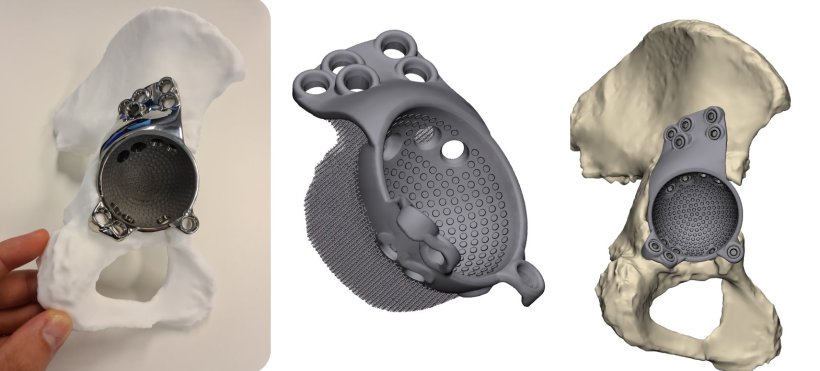
The evolution of joint replacement technology has introduced a compelling choice: should you opt for a custom-made implant designed specifically for your unique anatomy, or rely on proven standard implants that have served millions of patients successfully?
Custom 3D-printed and patient-specific implants represent cutting-edge technology that promises better fit, improved outcomes, and enhanced longevity. Yet standard off-the-shelf implants boast decades of clinical data, proven track records, and significantly lower costs. Understanding the genuine differences and the marketing hype surrounding them empowers you to make an informed decision.
Understanding Standard Implants
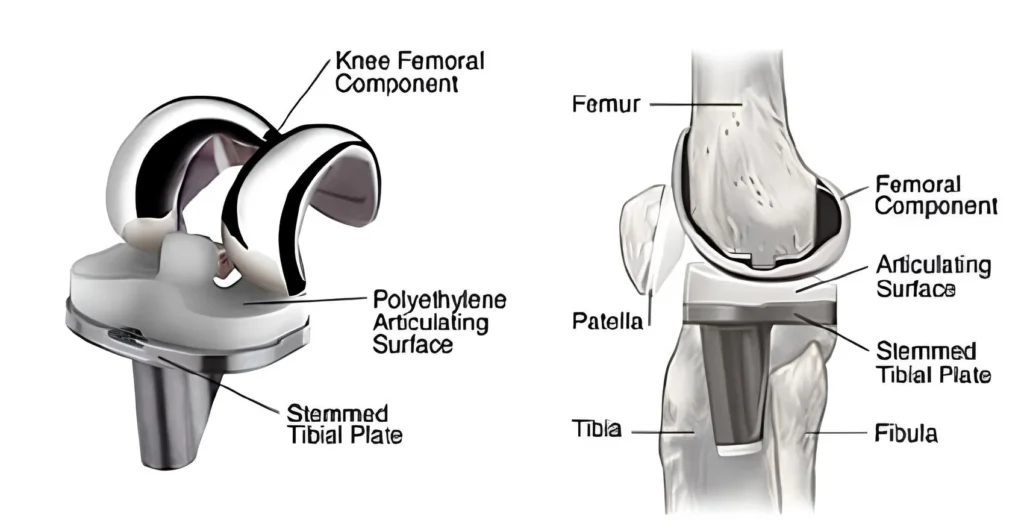
Standard implants have evolved over 50+ years into highly refined, reliable devices available in multiple sizes to fit most patients’ anatomy.
How Standard Implants Work:
Size Matrix System:
- Manufacturers produce implants in 6-12 size increments
- Femoral (thighbone) components: small, medium, large, extra-large variants
- Tibial (shinbone) components: corresponding size range
- Patellar components: multiple thickness options
- Mix-and-match capability between femoral and tibial sizes
Intraoperative Selection:
- Surgeon measures your bone dimensions during surgery
- Pre-operative imaging guides size estimation
- Trial components tested before final implant
- Best-fit selection from available size matrix
- Minor modifications possible during surgery
Design Philosophy:
- Based on anatomical studies of thousands of knees
- Optimized for average bone geometry
- Proven biomechanics and wear characteristics
- Extensive clinical data supporting design choices
Standard Implant Advantages:
Proven Track Record:
- 15-20+ years of clinical follow-up data
- Millions of implants worldwide
- Known complication rates and outcomes
- Predictable long-term performance
- Established revision procedures if needed
Immediate Availability:
- No waiting period for manufacturing
- Surgery scheduled at your convenience
- Backup sizes available during surgery
- Can proceed if pre-operative planning changes
Lower Cost:
- Significantly less expensive than custom implants
- Better insurance coverage typically
- No additional manufacturing fees
- More affordable for healthcare systems
Surgeon Familiarity:
- Extensive training with standard systems
- Deep experience with specific implant brands
- Known surgical techniques
- Predictable outcomes based on surgeon’s experience
Versatility:
- Adaptable to unexpected intraoperative findings
- Can adjust size selection during surgery
- Compatible with various surgical approaches
- Options for difficult anatomy
Standard Implant Limitations:
Anatomical Compromise:
- Not perfectly matched to individual anatomy
- Some overhang or underhang may occur
- May not recreate exact natural joint line
- Approximation of ideal fit rather than perfect match
Size Gaps:
- Patient anatomy may fall between available sizes
- Surgeon chooses closest fit, not exact match
- Particularly challenging for very small or very large patients
- Asian and female patients sometimes underserved by size ranges
One-Size-Fits-Most Philosophy:
- Designed for average anatomy
- Outliers may be less optimally fitted
- Assumes symmetry that may not exist
- Standardized approach to unique anatomy
Understanding Custom 3D Implants
Custom implants represent personalized medicine applied to joint replacement, with implants manufactured specifically for your anatomy.
How Custom Implants Work:
Pre-operative Imaging:
- CT or MRI scans of your knee joint
- 3D reconstruction of bone anatomy
- Precise measurements of dimensions and angles
- Mapping of cartilage loss and bone deformity
Computer-Aided Design:
- Software creates patient-specific implant design
- Optimizes fit for your exact anatomy
- Accounts for bone defects or deformities
- Plans component positioning and alignment
Manufacturing Process:
- 3D printing or CNC machining creates implant
- Custom cutting guides manufactured simultaneously
- Patient-specific instrumentation designed
- 4-6 week manufacturing timeline typically
Surgical Implementation:
- Custom guides ensure precise bone cuts
- Pre-planned implant positioning
- Implant designed to fit your exact anatomy
- Less intraoperative decision-making required
Custom Implant Advantages:
Anatomical Precision:
- Exact match to your unique bone geometry
- Precise coverage without overhang or underhang
- Restoration of your natural joint line
- Accommodation of bone deformities or defects
Optimized Biomechanics:
- Alignment tailored to your specific anatomy
- Soft tissue balancing potentially improved
- Kinematics (movement patterns) closer to natural
- Reduced edge loading and stress concentration
Surgical Precision:
- Custom cutting guides improve accuracy
- Pre-planned positioning reduces variability
- Less intraoperative estimation required
- Potentially shorter surgical time with guides
Theoretical Long-Term Benefits:
- Better fit may reduce wear
- Optimal alignment could improve longevity
- Reduced stress on bone-implant interface
- Potentially lower revision rates (data still emerging)
Patient-Specific Solutions:
- Addresses unusual anatomy effectively
- Beneficial for revision surgery with bone loss
- Helpful for patients with prior trauma or deformity
- May serve underrepresented anatomical groups better
Custom Implant Limitations:
Limited Long-Term Data:
- Technology relatively new (10-15 years vs. 50+ for standard)
- Fewer patients with 15-20 year follow-up
- Unknown long-term wear characteristics
- Less predictable revision procedures
Significant Cost Premium:
- 30-50% more expensive than standard implants
- Additional manufacturing fees
- Custom imaging and planning costs
- Often not covered by insurance or limited coverage
- Out-of-pocket costs can be substantial
Manufacturing Timeline:
- 4-6 weeks from imaging to implant delivery
- Delays surgery compared to standard implants
- Cannot proceed if pre-operative condition changes
- Re-manufacturing required if design changes needed
Reduced Intraoperative Flexibility:
- Cannot adjust size if unexpected findings during surgery
- Committed to pre-operative plan
- Limited backup options if custom doesn’t fit perfectly
- May require conversion to standard if complications arise
Technical Complexity:
- Requires advanced imaging and planning
- Surgeon must be trained in custom systems
- Potential for planning errors affecting outcomes
- Learning curve for surgical teams
Limited Evidence of Superiority:
- Clinical studies show mixed results
- Some show no significant advantage over standard
- Benefits may be modest rather than transformative
- Cost-benefit ratio questioned by many researchers
What Does the Research Show?
Clinical Outcome Studies:
Pain Relief and Function:
- Most studies show similar pain relief between custom and standard
- Functional outcomes (walking, stairs, activities) largely equivalent
- Patient satisfaction scores comparable
- No consistent advantage in patient-reported outcomes
Implant Positioning:
- Custom implants achieve more precise alignment in some studies
- Clinical significance of 1-2 degree differences unclear
- Standard implants with robotic assistance achieve similar precision
- Surgical technique may matter more than implant customization
Complication Rates:
- Similar overall complication rates
- No significant difference in infection or blood clot risk
- Revision rates similar in mid-term follow-up
- Long-term revision data still emerging
Cost-Effectiveness:
- Most analyses find custom implants not cost-effective
- Modest benefits don’t justify substantial cost increase
- Healthcare systems generally don’t favor adoption
- Individual patients may value customization differently
Biomechanical Research:
Kinematics (Movement Patterns):
- Some studies show more natural movement with custom implants
- Differences often small and may not affect function
- Standard implants also restore good kinematics in most patients
- Clinical relevance of minor kinematic differences debated
Wear Characteristics:
- Theoretical advantages of better fit reducing wear
- Long-term wear studies still ongoing
- Modern polyethylene in standard implants very durable
- Custom advantage may be minimal with current materials
Bone Preservation:
- Better fit theoretically preserves more bone
- May matter more for younger patients facing future revision
- Standard implants also preserve bone well with modern techniques
- Benefit may be modest in practice
Who Might Benefit Most from Custom Implants?
Strong Candidates for Custom:
Unusual Anatomy:
- Significant deformity from prior trauma
- Bone loss requiring reconstruction
- Congenital abnormalities
- Prior surgery altering normal anatomy
- Previous failed implant with bone deficiency
Anatomical Outliers:
- Very large or very small patients
- Ethnic populations underrepresented in standard sizing
- Significant bone asymmetry
- Unusual bone geometry not well-served by standard sizes
Revision Surgery:
- Previous implant failure with bone loss
- Complex revision cases
- Need for custom solutions for bone defects
- Standard revision components insufficient
Young, Active Patients: As discussed in our guide on young adults and hip replacement, similar principles apply to knee replacement:
- Longer expected implant lifespan needed
- Higher activity demands
- Potential revision concerns
- Optimization may provide greater long-term value
Patients Highly Valuing Customization:
- Strong preference for personalized medicine
- Willing to pay premium for potential advantages
- Comfortable with newer technology
- Not concerned about limited long-term data
Patients Unlikely to Benefit:
Standard Anatomy:
- Normal bone geometry well-served by standard sizes
- No significant deformity
- Typical weight and build
- No unusual anatomical features
Older Patients:
- Advanced age (>75-80 years)
- Lower activity demands
- Standard implant longevity exceeds life expectancy
- Cost-benefit less favorable
Budget-Conscious Patients:
- Significant out-of-pocket costs a concern
- Insurance doesn’t cover custom premium
- Standard implants meet needs adequately
- Cost difference not justified by modest potential benefit
Patients Requiring Urgent Surgery:
- Cannot wait 4-6 weeks for custom manufacturing
- Progressive symptoms requiring prompt treatment
- Medical conditions making delay inadvisable
The Role of Robotic Surgery with Standard Implants
An important consideration: robotic-assisted surgery with standard implants may achieve many benefits attributed to custom implants.
Robotic Advantages:
Precision Positioning:
- Accuracy within 1 degree and 1 millimeter
- Pre-operative 3D planning
- Real-time navigation during surgery
- Consistent achievement of planned alignment
Optimized Fit:
- Better size selection from standard matrix
- Precise positioning of chosen size
- Reduced overhang or underhang
- Optimal soft tissue balancing
As detailed in our comprehensive guide on robotic vs. traditional knee replacement, advanced surgical technology may deliver precision benefits without custom implant costs.
Cost Comparison:
- Robotic surgery premium: typically less than custom implants
- Better insurance coverage for robotic surgery
- Combines precision with proven implant designs
- May offer “best of both worlds” approach
Making Your Decision: A Practical Framework
Questions to Consider:
About Your Anatomy:
- Do I have unusual anatomy or significant deformity?
- Did my surgeon mention difficulty finding appropriate standard sizes?
- Do I fall into anatomical outlier categories?
- Have I had previous surgery or trauma affecting bone geometry?
About Your Goals:
- What outcomes matter most to me?
- Am I seeking cutting-edge technology or proven reliability?
- How important is anatomical precision vs. clinical outcomes?
- What timeline works for my surgery?
About Financial Considerations:
- What are the actual cost differences?
- Will my insurance cover custom implants?
- Can I afford the out-of-pocket premium?
- Is the potential benefit worth the additional cost?
About Risk Tolerance:
- Am I comfortable with newer technology?
- Do I prefer extensive long-term data?
- How do I feel about limited evidence of superiority?
- What’s my tolerance for uncertainty?
Questions for Your Surgeon:
About Their Experience:
- How many custom implants have you performed?
- What percentage of your patients receive custom vs. standard?
- What have you observed regarding outcomes?
- Do you have a preference based on your experience?
About Your Specific Case:
- Do you recommend custom implants for my anatomy?
- What specific advantages might I gain?
- Are there disadvantages in my case?
- Would robotic surgery with standard implants serve me equally well?
About Evidence:
- What does research show about custom vs. standard outcomes?
- What are realistic expectations for benefits?
- How do costs compare?
- What would you recommend for your family member?
Cost-Benefit Analysis
Standard Implants:
Costs:
- Base implant cost: $5,000-8,000
- Included in standard surgical package
- Well-covered by insurance
- Predictable out-of-pocket costs
Benefits:
- Proven long-term outcomes
- Immediate availability
- Established revision procedures
- Extensive clinical data
- Surgeon expertise
Value Proposition:
- Excellent outcomes for vast majority of patients
- 90-95% patient satisfaction
- 15-20+ year implant survival
- Known quantity with predictable results
Custom Implants:
Costs:
- Implant cost higher than standard implants
- Manufacturing fees
- Custom imaging and planning
- Often substantial out-of-pocket costs
Benefits:
- Perfect anatomical fit
- Potential for improved biomechanics
- Personalized solution
- Addresses unusual anatomy well
- May improve long-term outcomes (unproven)
Value Proposition:
- Modest proven advantages for most patients
- Significant advantages for anatomical outliers
- Higher cost for uncertain additional benefit
- Appeal of cutting-edge, personalized technology
The Future of Custom Implants
Evolving Technology:
Manufacturing Advances:
- Faster production timelines
- Reduced costs through scale
- Improved materials and designs
- Better integration with surgical planning
Artificial Intelligence:
- AI-assisted design optimization
- Predictive modeling of outcomes
- Automated planning reducing errors
- Learning from outcomes data
Wider Availability:
- More manufacturers entering market
- Increased surgeon training and adoption
- Potential for broader insurance coverage
- Price competition reducing premiums
Emerging Evidence:
Long-Term Studies:
- 15-20 year data gradually accumulating
- Better understanding of revision rates
- Clarification of true benefits
- Refinement of ideal candidates
Comparative Effectiveness:
- Head-to-head trials improving
- Cost-effectiveness analyses
- Patient-reported outcome comparisons
- Biomechanical validation
Special Considerations
Bone Health and Implant Fixation:
For patients with osteoporosis or weak bones, implant fit affects fixation quality. As explored in our guide on maintaining bone health after 40, optimizing bone density benefits both standard and custom implants.
Custom Advantages:
- Precise fit may improve fixation in weak bone
- Better load distribution
- Reduced stress concentration
Standard Alternatives:
- Modern fixation techniques very effective
- Cement augmentation for poor bone
- Proven long-term results even with osteoporosis
Long-Term Outlook:
As discussed in our guide on life after knee replacement, both implant types require similar long-term maintenance:
Activity Guidelines:
- Same for both implant types
- Low-impact activities recommended
- Weight management crucial
- Regular follow-up monitoring
Revision Considerations:
- Standard implants: well-established revision procedures
- Custom implants: revision less standardized, may require custom revision components
- Both: young patients may eventually need revision regardless of implant type
The Pragmatic Middle Ground
For many patients, the choice isn’t binary. Consider these options:
Robotic Surgery with Standard Implants:
- Combines precision of planning with proven implants
- Lower cost than custom
- Better insurance coverage
- Achieves many theoretical custom advantages
Semi-Custom Approaches:
- Some manufacturers offer “conformable” or modular implants
- More size options than traditional standard
- Less expensive than fully custom
- Shorter manufacturing time
Surgeon Expertise Over Implant Type:
- Experienced surgeon with standard implants often better than inexperienced surgeon with custom
- Surgical technique and precision matter enormously
- Volume and outcomes should guide surgeon selection
- Don’t choose inferior surgeon just for access to custom implants
The Bottom Line: Evidence-Based Perspective
After reviewing the current evidence and clinical experience, several conclusions emerge:
For Most Patients:
- Standard implants provide excellent outcomes
- 90-95% achieve significant pain relief and functional improvement
- Proven long-term durability and known revision procedures
- Cost-effective with strong insurance coverage
- Robotic assistance can enhance precision without custom costs
Custom Implants Excel For:
- Unusual anatomy or significant deformity
- Revision surgery with bone loss
- Anatomical outliers poorly served by standard sizes
- Patients highly valuing personalized medicine
- Those willing to pay premium for potential (not guaranteed) advantages
The Evidence Shows:
- Modest benefits in most clinical studies
- No dramatic superiority in patient-reported outcomes
- Similar pain relief and functional improvement
- Theoretical advantages not consistently realized clinically
- Cost premium not justified for average patient
Critical Success Factors:
- Surgeon experience and skill matter more than implant type
- Surgical precision crucial regardless of implant choice
- Patient selection and realistic expectations essential
- Long-term outcomes depend on multiple factors beyond implant customization
Make Your Choice Based On:
- Your specific anatomy and surgical needs
- Surgeon’s recommendation and experience
- Financial considerations and insurance coverage
- Personal values regarding technology and customization
- Realistic understanding of proven vs. theoretical benefits
Remember: The best implant is the one that’s:
- Appropriately sized and positioned for your anatomy
- Implanted by an experienced, skilled surgeon
- Followed by dedicated rehabilitation
- Protected through appropriate long-term activity choices
- Monitored regularly for optimal outcomes
Whether standard or custom, modern knee replacement delivers life-changing results for the vast majority of patients. Focus on surgeon selection, surgical precision, and commitment to rehabilitation these factors influence your outcome more than the specific implant customization.
The choice between 3D custom and standard implants isn’t about which is universally “better”—it’s about which is better for your specific situation, values, and anatomy. For most patients, excellent standard implants combined with precise surgical technique deliver outstanding outcomes. For select patients with unusual anatomy or specific needs, custom implants offer genuine advantages worth considering.
Choose wisely, informed by evidence rather than marketing, guided by experienced surgeons, and confident that modern joint replacement whether custom implant surgery or standard offers remarkable potential for restoring your active, pain-free life.
Leave a Reply